What Is The Best Choice Of Flat Roof Coating In Bergen County, NJ?
What Is The Best Choice Of Flat Roof
Coating In Bergen County, NJ?
The Best Materials to Protect
Your Commercial Building
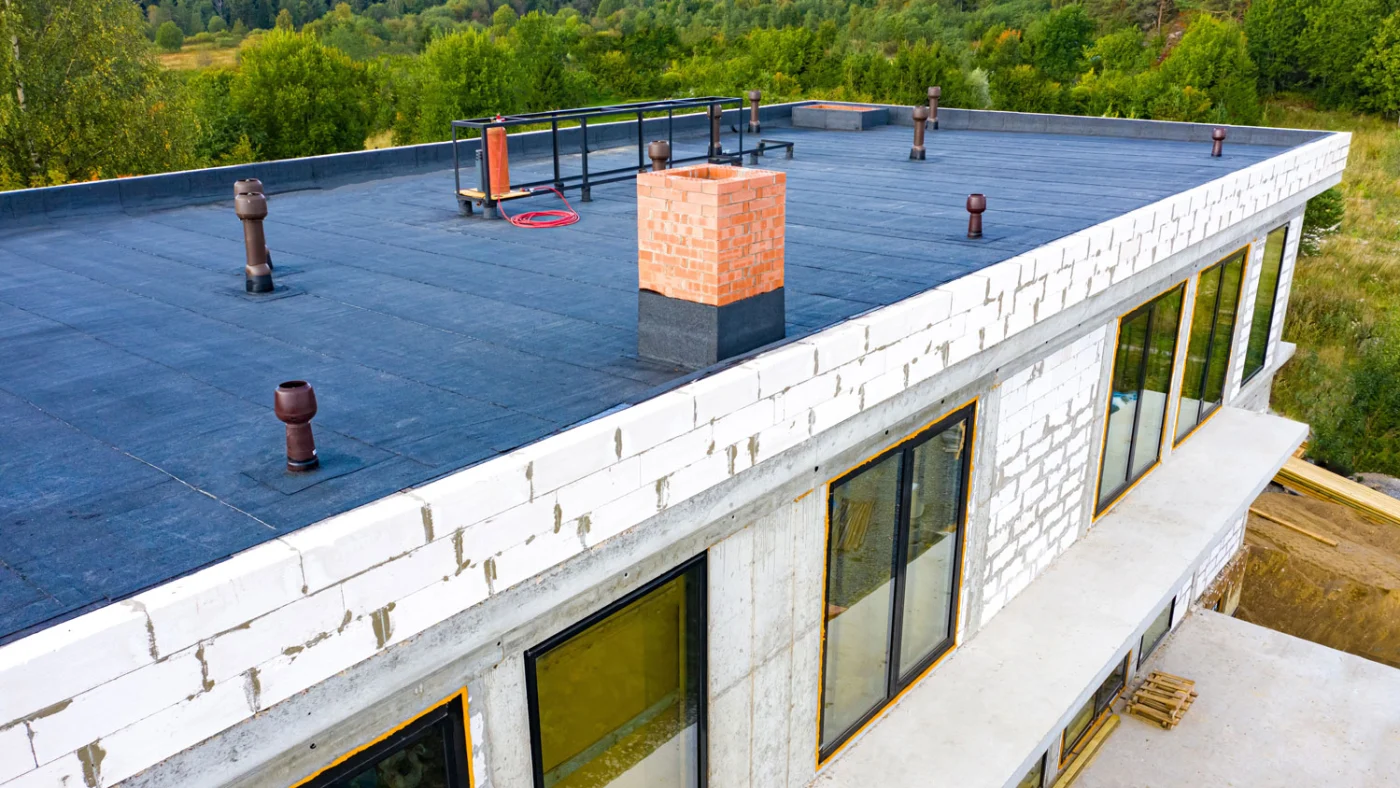
The flat roof of your commercial, industrial, church or multi-family building in Bergen County, NJ, needs regular care and maintenance. One key task is to apply a flat roof coating to seal it against moisture and to protect it against the sun’s ultraviolet radiation.
Many types of coatings are available. The information below will help you choose the right type for your commercial property.
Why Do North Jersey Flat Roofs Need Coatings?
Commercial flat roofs in Bergen County, NJ, are exposed to the elements all day, every day, all year round. And the weather in the state can be brutal. Temperatures can range from -20 degrees to 110 degrees. In addition, roofs must withstand wind, rain, sleet, snow, hail, and harsh sunlight. These elements cause significant damage over time.
For instance, falling hailstones strike the roof at high speeds and leave impact craters or dent flashing. Rain and melting snow infiltrate beneath roofing materials, and when the water eventually freezes, it expands and creates larger gaps. These permit even more moisture access.
You’re left with a vicious cycle that eventually leaves the roof vulnerable to terrible leaks.
Flat roof coatings provide various types of protection from the elements. The coating rejuvenates older roofing materials and prevents deterioration that results in leaks.
It also seals any current leaks to prevent moisture from dripping inside. This helps you avoid a damaged roof structure, destruction of carpeting and furniture, drywall stains, and peeling paint and wallpaper.
Finally, flat roof coatings can rejuvenate your roofing materials and extend the roof’s lifespan 5 to 20 years. That puts off the cost of expensive roof replacement potentially by decades.
What Is The Best Flat Roof Coating In North Jersey?
The best flat roof coating depends on your roof, your needs, and the situation. There are many types of coatings that address different issues. The information below should help you choose the best flat roof coating for your purposes.
Silicone Flat Roof Coating
Silicone is a colorless, heat resistant, rubber-like synthetic polymer. It is used in a wide variety of applications, from cooking to construction.
As a flat roof coating, silicone is popular because of its aesthetics and durability. If installed properly, it will serve you for over 20 years, leak-free. It prevents leaks and withstands ponding water. It holds up well in climates that experience wide temperature fluctuations, like North Jersey.
Acrylic Flat Roof Coating
Acrylic is a synthetic polymer used in everything from clothing to paint. It also makes an effective flat roof coating.
It is among the most popular choices. It dries quickly once applied, and it adheres firmly to almost any surface. Once it has cured, it is very flexible and waterproof. It allows careful foot traffic across your roof and withstands impacts by falling or buffeting tree branches.
Unlike other coatings, it provides exceptional stain resistance. Also, it is water-based so there is no odor. Acrylic is not flammable.
Acrylic coatings are generally highly reflective. This means light and radiation bounce off them, which helps keep the roof from absorbing heat, making it easier to cool your commercial building.
Acrylic coatings work well with both bituminous and non-bituminous roofs.
Asphalt Based Coating
Asphalt based coatings have been in existence for more than 100 years and are still the unsung hero in the roof coating family. Typically, it is a cost-effective alternative to many higher price coating systems, while still offering a respectable warranty of 5-15 years.
It can be applied as a cold black application or as a silver/aluminum application, which is very effective in reflecting UV sun rays. These types of coatings are very common in older properties that already have a asphalt base roof system and need to be rejuvenated.
Urethane Flat Roof Coating
Urethane coatings are sprayed on as a fluid and are among the strongest and most durable coatings on the market.
Urethane, or ethyl carbamate, is an organic compound that appears as a white solid. It is a carcinogen and is not often used in high-traffic areas, but it appears naturally in low quantities in many fermented foods and drinks.
As a flat roof coating, urethane is very strong and adheres well to the roof substrate. However, it has a strong smell, has a shorter lifespan than other options, and is difficult to spray.
Flat Roof Coatings: The Takeaway
Commercial roofs in Bergen County, NJ, must withstand a wide variety of harsh weather events. That’s why flat roof coatings are indispensable. They prevent moisture absorption when it rains or snows, prevent deterioration due to exposure to the sun, and reduce the cost of air conditioning.
Perhaps most importantly, they eliminate roof leaks.
To summarize, the most common types of flat roof coatings are urethane, silicone, and acrylic.
Urethane is very strong and adheres well, but it must be replaced more often than the other types. It also has a strong odor.
Silicone is very durable and long-lasting. It withstands pooling water and easily prevents leaks. It is a good choice for environments with wide or extreme temperature fluctuations.
Acrylic flat roof coatings dry quickly, adhere to most surfaces, and rejuvenate an older roof by making it more flexible. They have no odor, and they reflect sunlight, which makes it easier and less expensive to cool your building.
Asphalt coatings are cost-effective, with a middle of the road warranty, but are easy to maintain and rejuvenate over time.