Stop Spending Money Like It’s Your Job: The 1Call Restore Arctic Survival Guide
Stop Spending Money Like It’s Your Job: The 1Call Restore Arctic Survival Guide
When the ice-thaw cycle shows up in North Jersey, it doesn’t knock politely—it kicks the door in and audits every seam, penetration, and weak point on your building’s exterior. This guide explains what’s happening, why “replace it” isn’t always the answer, and how to protect your roof (and your budget) before your property becomes an indoor water park.
What the Ice-Thaw Cycle Really Does to Your Roof
The ice-thaw cycle is less “seasonal inconvenience” and more “slow-motion demolition.” Here’s the pattern:
- Moisture finds a path through small cracks, failed sealant, aged seams, or around penetrations (HVAC curbs, vents, skylights).
- Temperatures drop and that moisture freezes.
- Ice expands (and keeps expanding) until it forces materials apart.
- Thaw happens, water moves deeper into the assembly, and the cycle repeats—each time making the problem worse.
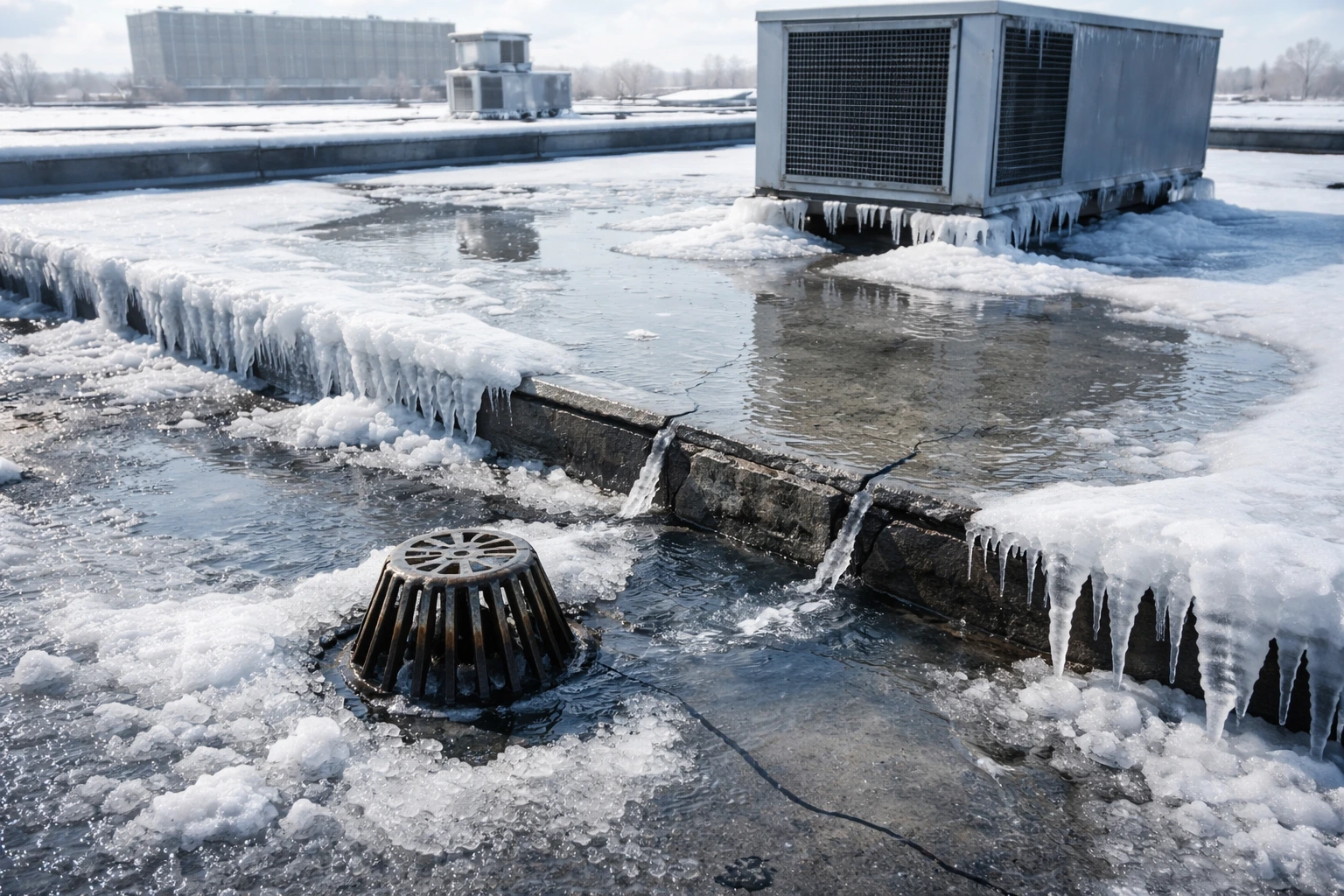
The result? Seams that used to be “fine” become separated, membranes get stressed, fasteners loosen, flashings fail, and saturated insulation loses its thermal performance—meaning your building pays twice: once in damage, and again in energy costs.
Winter Damage You Can’t Ignore
Not all roof problems scream. Many whisper for months, then show up loudly during cold snaps. Watch for these building-wide warning signs:
- Water stains that “reappear” after storms or temperature swings
- Dripping around HVAC units, skylights, parapet walls, and roof drains
- Musty odors (moisture in insulation and deck cavities loves to stay hidden)
- Ceiling tile deformation, bubbling paint, or soft spots on interior finishes
- Ponding water that lingers long after precipitation ends
If any of these are familiar, don’t “monitor it.” That’s just procrastination with extra steps.
Commercial Roofing in North Jersey: The Art of Not Getting Scammed
Let’s talk about the most predictable winter script in commercial roofing: a contractor walks your roof, points at a problem area, and announces a full replacement like it’s the only rational option. Then comes a number that looks like a phone extension.
Replacement is sometimes necessary. But it’s also the most expensive solution—and the most profitable for a contractor who’s paid to sell it. The smarter question is: Can the roof be restored to perform like new without tearing everything off?
Restoration vs Replacement: What’s the Difference?
A quality restoration focuses on repairing what’s damaged, reinforcing the system, and creating a seamless waterproof layer that improves performance—often at a fraction of replacement cost. A replacement involves ripping off the existing roof system, disposing of materials, and rebuilding from the deck up.
When Restoration Often Makes Sense
- The roof structure is sound and the majority of the system is still serviceable
- Leaks are localized to seams, penetrations, flashings, or aging surface areas
- You need improved waterproofing and ponding resistance without disrupting tenants
- You want to extend service life while controlling capital expenditures
Learn more about full-scope commercial systems and what a professional approach looks like here: [Commercial & Industrial Roofing](https://www.1callrestore.com/commercial-roofing/commercial-industrial-roofing/)
When Replacement Might Actually Be the Right Call
- Widespread saturation in insulation and multiple layers have failed beyond practical repair
- Structural deck deterioration is present
- The roof has reached end-of-life with systemic failure across large areas
- Code or design changes require a new assembly
If replacement is truly necessary, you should still demand a clear explanation (photos, moisture data, and a real scope of work). Here’s a dedicated overview: [Roof Replacement](https://www.1callrestore.com/commercial-roofing/roof-replacement/)
The Restoration Play: Coatings, Reinforcement, and a Roof That Stops Leaking
Restoration isn’t “slap something on it.” Done correctly, it’s a system approach: address damage, reinforce weak points, and create a continuous waterproof membrane that can handle weather, thermal movement, and ponding water.
Why Flat Roofs Get Wrecked in Winter
Flat and low-slope roofs are common across warehouses, retail, offices, and institutional buildings in North Jersey. They’re also especially vulnerable when:
- Drainage is compromised (clogged drains, settled insulation, poor slope)
- Seams age and adhesives/tapes lose flexibility
- Penetrations multiply over the years (new units, new conduits, “just one more” roof opening)
- Ponding water sits and accelerates deterioration
Maintenance Isn’t Glamorous—It’s Cheaper Than Panic
Winter exposes everything you skipped in fall: tiny cracks, failing sealant, neglected drains, and “we’ll get to it next quarter” repairs that quietly turned into big problems.
A disciplined roof maintenance plan typically includes:
- Regular inspections (especially after major wind events and freeze-thaw swings)
- Drain and scupper clearing
- Sealant checks at penetrations and terminations
- Targeted repairs before water enters the system
- Documentation for ownership, insurance, and budgeting
If you’re building a maintenance program or trying to catch up after years of “we’ve been meaning to,” this is the hub: [Roof Repair & Maintenance](https://www.1callrestore.com/commercial-roofing/roof-repair-maintenance/)
Emergency Roof Repair in North Jersey: Because Hope Is Not a Strategy
If you’re reading this while water is actively entering your building, let’s skip the blame and focus on outcomes. Emergency response should be more than “throw a tarp and pray.”
What a Real Emergency Response Looks Like
- Locate the true entry point (not just the interior drip location)
- Stabilize the area and prevent further spread—especially around seams and penetrations
- Assess for trapped moisture and insulation saturation risk
- Perform durable repairs that survive additional freeze-thaw cycles
- Create a restoration plan to prevent recurring events
Not All Roofs Are the Same: Matching Solutions to Your Roof Type
North Jersey buildings aren’t one-size-fits-all. A shopping center, municipal building, historic property, and industrial warehouse each have different roof assemblies and performance needs. Here are a few common categories—and where to learn more:
Institutional Buildings: Schools, Municipal Properties, and Public Facilities
Institutional roofing has unique constraints: schedules, occupancy, compliance, and the need for long-term reliability. If you manage a public-facing facility and need a solution that respects operations and safety, start here: [Institutional Roofing](https://www.1callrestore.com/commercial-roofing/institutional-roofing/)
Slate & Tile Roofs: Historic, Beautiful, and Not Something You “Wing It” On
Slate and tile systems require specialized repair and restoration methods—especially in winter, when freeze-thaw stress can crack units and compromise flashing. If your building uses slate/tile and you need a real plan (not guesswork), explore: [Slate & Tile Roof Repair, Restoration & Maintenance](https://www.1callrestore.com/commercial-roofing/slate-tile-roofs-in-nj-repair-restoration-maintenance-1call-restore/)
Shingle Roof Coating Systems: Extending Life Without Starting Over
Certain shingle roof situations can benefit from coating systems designed to extend service life and strengthen weather resistance. If your property includes shingle roofing and you’re evaluating options beyond “replace it,” see: [Shingle Roof Coating System](https://www.1callrestore.com/shingle-roof-coating-system-north-jersey/)
Stop the Budget Bleed: How Roof Neglect Turns into a Money Pit
Here’s the brutal math: the longer you delay, the more expensive the fix becomes. A small penetration issue becomes saturated insulation. Saturated insulation becomes heat loss, mold risk, and deck deterioration. Deck deterioration becomes structural repairs. Structural repairs become tenant complaints, downtime, and potentially replacement.
The “Comedy of Errors” That Costs You the Most
- Ignoring September leaks because “it’s not that bad.”
- Skipping drain maintenance until ponding water starts acting like a rooftop swimming pool.
- Letting a handyman patch it with incompatible materials that fail at the first deep freeze.
- Accepting a replacement pitch without moisture testing, photos, or a restoration evaluation.
A roof is a system. You don’t “spot fix” your way out of systemic problems—but you also don’t default to replacement when restoration is viable.
Your Choices Fund the Mission (Don’t Forget It)
Providing impeccable solutions and results isn’t a tagline; it’s how you stay in business for decades while fly-by-night crews disappear every time it snows. There’s another layer here too: the work you choose to fund matters.
Every time a customer chooses 1Call Restore and opts for a smart restoration path (when appropriate), it supports the company’s ability to keep giving back—supporting organizations like The Trevor Project, the Hyacinth Foundation, and Wynona’s House, while honoring Debbie Anania’s legacy of helping New Jersey families in crisis.
Let Chuck prove you wrong. Get a real-talk inspection before you waste another dollar.
Arctic Survival Checklist: What to Do Today
If you want one practical, no-excuses list to reduce winter roof damage risk, here it is:
- Walk the interior (top floor/upper deck) and note stains, drips, or odor areas.
- Check drains and scuppers for blockage—especially after wind events.
- Look for ponding areas and document them with photos and timestamps.
- Inspect penetrations (HVAC curbs, vents, conduit) for cracked sealant or gaps.
- Don’t accept “replace it” without evidence: moisture data, photos, and a restoration evaluation.
- Schedule a professional assessment before the next cold snap makes everything worse.