Does Waterproofing Boost Commercial Building Value?
How Exterior Waterproofing Boosts The Value
Of Bergen County, NJ Commercial Buildings
Protect Your Property And Prevent Mold
With 1 Call Restore In North Jersey
When you own or manage a commercial building, it is important to maintain it properly so it retains its resale value. Facilities that are not well-cared for can plummet in price and become difficult to sell. Moreover, water damage can be expensive to repair and may interfere with production.
That is why exterior waterproofing in Bergen County, NJ is so important. It creates a membrane on the exterior of your commercial building that keeps moisture out, prevents mold, and strengthens the structure’s integrity.
The information below contains everything you need to know about exterior waterproofing, including what it is and why it improves the property value of your commercial building.
What Is Exterior Waterproofing?
The cladding, or exterior siding, of a commercial building is relatively resistant to moisture. This is particularly true of buildings covered in brick or concrete. However, over time, water can penetrate even brick and mortar.
If this happens, moisture can infiltrate the building, and this often leads to property damage. For instance, leaks can destroy flooring, furniture, drywall, and finishings. It can lead to rust on manufacturing equipment. It can even weaken the building’s foundation and structural integrity.
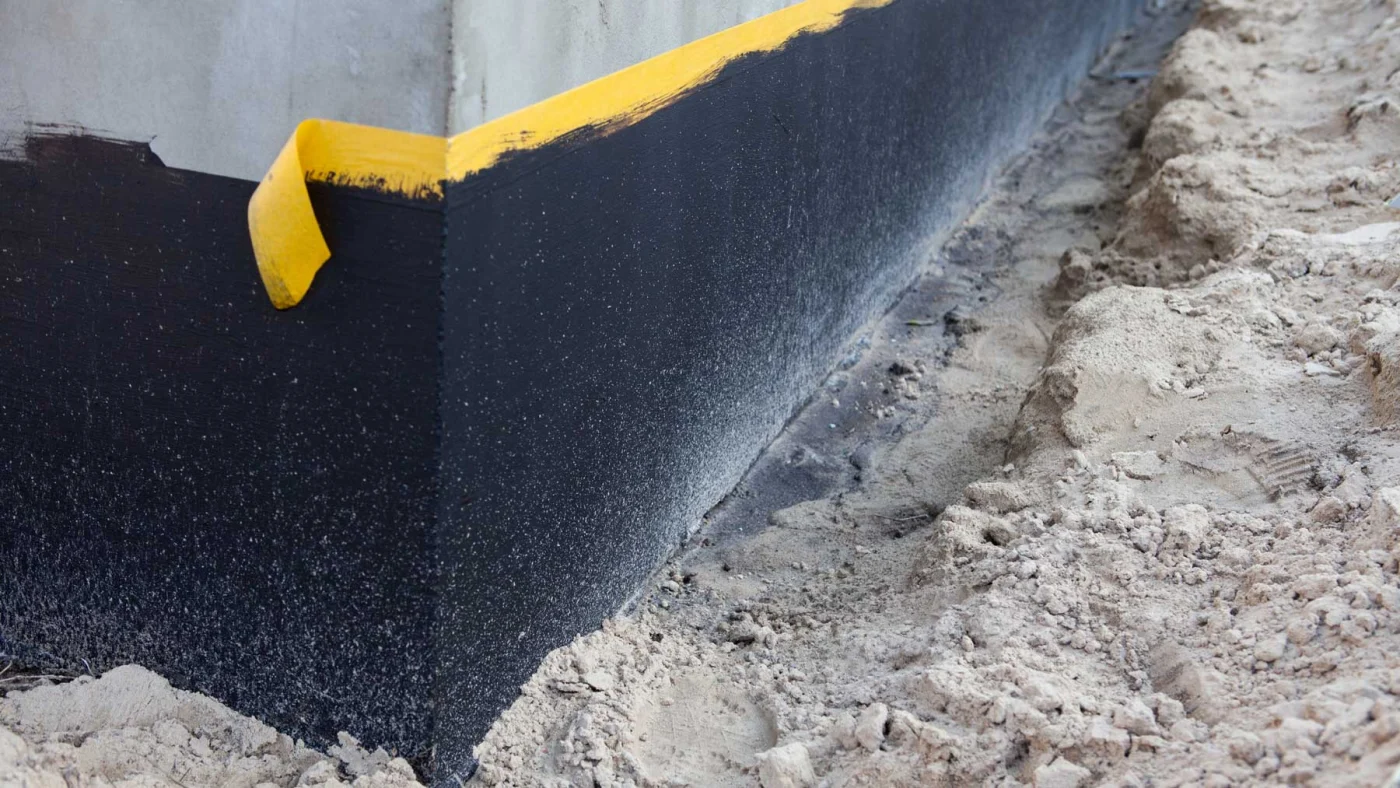
Exterior waterproofing is a process during which contractors paint the exterior walls with various types of coatings that resist moisture. These include the following:
- Acrylic coatings
- Cement coating
- Stucco finishes
- Rubberized asphalt
- Elastomeric coatings
- Bituminous membrane
- Silicone coatings
Contractors typically apply these coatings with a roller and paintbrush. However, any damage to the outer walls must be repaired before the coating is applied, and some coatings are only appropriate for certain wall materials.
Exterior Waterproofing Eliminates
North Jersey Property Damage
As mentioned above, exterior waterproofing prevents moisture from infiltrating your commercial building and causing property damage. Some of the most common types of damage occur to flooring. Hardwood floors, carpeting, and rugs are often destroyed by water seepage.
Furniture is also frequently damaged. This is particularly true of furnishings made of wood, upholstery, and leather. When leather gets wet, the water molecules bind to the oils within the leather. This results in shrinking, cracking, and discoloration. The leather also turns brittle as it dries and is at greater risk of further damage.
When wood absorbs moisture, it swells and changes shape. The wood is then weakened and becomes susceptible to rot.
Exterior Waterproofing Maximizes
Your Building’s Usable Space
Over time, many owners or managers of commercial properties find the interior usable space shrinks. This is due to the fact that some areas of the facility are susceptible to water infiltration. For instance, you may no longer store inventory or work-in-process in the designated storage area because it is at risk of water damage if it rains.
Many commercial buildings have usable footprints that are far smaller than their actual square footage because so much of the floor is susceptible to flooding. This means production must be squeezed into a smaller area. It often makes foot traffic inconvenient and working conditions cramped.
If you have found that your North Jersey manufacturing space is being constricted due to the risk of water infiltration, consider exterior waterproofing to alleviate the problem.
Exterior Waterproofing Improves Air
Quality And Workplace Efficiency
One of the most critical problems with commercial buildings that leak is that they face considerable indoor humidity. Warm, humid spaces are at high risk of mold infestation.
Mold spores exist almost everywhere, simply floating along air currents in search of a damp place to propagate. A commercial building susceptible to water leaks is an ideal location for mold growth.
Once mold takes hold, it is very difficult and expensive to get rid of. Worse, it can have numerous negative health effects. For instance, mold causes sneezing, coughing, itchy eyes, runny nose, skin rash, and respiratory distress. It also exacerbates the symptoms of asthma.
Companies that suffer mold infestations suffer from considerable worker inefficiency. Employees take more frequent breaks to address sniffling, sneezing, and other flu-like symptoms. They spend less time working. They take time off to recuperate or visit the doctor. And they utilize insurance resources in greater numbers.
Avoid these issues and boost the value of your building by scheduling exterior waterproofing today.