Commercial Roof Leak Detection in NJ: How Professionals Find Leaks Without Tearing Your Roof Apart
Commercial Roof Leak Detection in NJ: How Professionals Find Leaks Without Tearing Your Roof Apart
If you manage a commercial or industrial property in New Jersey, a roof leak can go from “minor nuisance” to expensive operational disruption fast. The good news is that modern commercial leak detection is built to be precise, not destructive. In most cases, professionals can pinpoint the source of a leak without tearing up your entire roof system.
Why Commercial Roof Leaks Are So Hard to Track
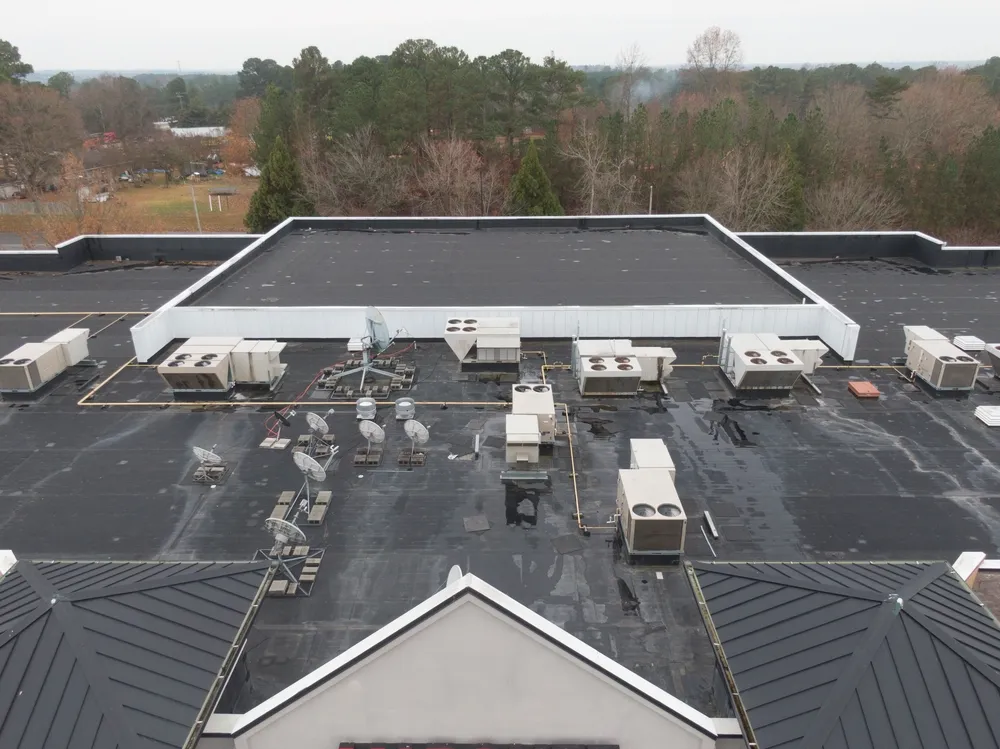
On flat and low-slope roofs, water doesn’t always enter where it shows up inside. Moisture can travel along the membrane, insulation, deck seams, or around rooftop equipment before it finally drips into a ceiling tile, office, or production area. That’s why “patch where it’s leaking inside” is rarely the right move.
Professional leak detection focuses on identifying the true entry point, then confirming the condition of the system around it, so repairs actually last.
Step 1: Documentation and Leak History Review
Before anyone steps onto the roof, the best commercial roof teams gather details like:
- Where the leak is visible inside and when it happens (heavy rain, wind-driven rain, melting snow)
- Any prior repair locations and what materials were used
- Recent rooftop work (HVAC service, new penetrations, equipment installs)
- Age of the roof system and known problem areas
This step alone narrows down likely sources, especially around flashings, drains, seams, parapet walls, and rooftop units.
Step 2: Visual Roof Inspection (Targeted, Not Guesswork)
A professional inspection looks beyond obvious punctures. Crews check the areas that most commonly fail on commercial roofs in New Jersey:
- Open seams, laps, and membrane splits
- Compromised flashing at curbs, pipes, and penetrations
- Drain clogs, ponding water, and poor slope areas
- Cracked sealants, edge metal separation, and coping issues
- Damage from foot traffic, tools, or rooftop service work
If the roof has ongoing issues, proactive roof repair and maintenance is usually the fastest way to reduce repeat leaks and avoid emergency calls during storms.
Step 3: Non-Destructive Leak Detection Methods Professionals Use
Moisture Scans (Infrared and Electronic)
Moisture scanning helps identify wet insulation and moisture migration patterns. This can narrow the search area significantly, especially on larger commercial roofs where a leak could be traveling far from the entry point.
Controlled Water Testing (Strategic Flood or Hose Testing)
When used correctly, controlled water testing can confirm whether a specific roof detail is the culprit, like a curb flashing or a seam. Professionals do this in sections, documenting results so the diagnosis is based on evidence, not assumptions.
Membrane and Detail Checks Around Rooftop Equipment
Many commercial leaks start around rooftop equipment because it creates penetrations, foot traffic, and vibration. This is especially common on facilities with heavy HVAC loads or frequent roof access.
Drainage and Ponding Water Analysis
If water is sitting on your roof 48 hours after rain, it’s not just an inconvenience. Ponding accelerates deterioration and can force water into weak points over time, even if the membrane itself is otherwise in decent shape.
Step 4: Pinpoint the Root Cause, Then Choose the Right Solution
Leak detection is only valuable if it leads to the correct fix. Once the entry point is confirmed, a professional team will recommend the right path based on the condition of the roof system and your building goals:
- Localized repair: Best when the roof is generally sound and the problem is isolated.
- Restoration and coating: Ideal when the membrane is aging but still structurally viable, and you want to extend roof life without the downtime of a full replacement. Many NJ owners choose flat roof coatings for this reason.
- Replacement: Necessary when the roof is saturated, failing in multiple areas, or beyond economical repair. If you’re seeing widespread issues, exploring commercial roof replacement may be the most cost-effective long-term move.
For large facilities, warehouses, and complex systems, working with a team experienced in commercial and industrial roofing makes the diagnosis and solution far more reliable.
Common Signs You Need Professional Leak Detection Now
- Recurring leaks in the same area even after repairs
- Leaks that appear only during certain wind directions or heavy storms
- Water stains spreading across ceilings or walls
- Musty odors, mold concerns, or damp insulation indicators
- Ponding water and drain overflow during rain events
The earlier you confirm the source, the less likely you’ll face insulation saturation, deck deterioration, interior damage, and operational downtime.
Why “Rip and Replace” Is Not the Default Answer
Many commercial roof leaks in NJ can be resolved through targeted repairs, improved drainage, or restoration strategies, depending on system age and moisture levels. A professional leak detection process is designed to give you clarity, not push you into the most expensive option.
The right approach is the one that solves the problem and protects your building, with the best life-cycle cost for your situation.
Next Step: Get the Leak Found, Then Fix It the Right Way
If your commercial roof is leaking, don’t wait for the next storm to make it worse. A proper inspection and non-destructive leak detection can identify the real source quickly and help you choose between targeted repair, coating-based restoration, or replacement based on facts.
Start by exploring your options for commercial roof repair and maintenance, or if the roof is nearing end-of-life, review replacement pathways that fit your building and budget.